


Source: ChurchNext
How do Christians respond to the pervasive, overwhelming issue of economic inequality? Where do we begin the discussion of such a complex and influential subject?
In 2015 the Trinity Institute offered a conference called ‘Creating Common Good,’ in which thinkers from a wide range of perspectives and real-world experience offered practical tools to help individuals and congregations address this pressing subject. We offer these four courses to lay the groundwork for our discussions.
In this fourth class Archbishop of Canterbury The Most Rev. Justin Welby, who guides a faith tradition of 80 million believers, outlines a Christian response to economic inequality. He has made headlines by speaking out against payday lenders, who charge high rates for short term loans. And he has made the bold move of establishing credit unions in local churches (there are 16,000 churches in the UK) to make low interest loans available to all. Archbishop Justin’s lectures are entitled:
- What is Economic Inequality?
- Structures of Sin
- The Church’s Response
This course is ideal for those seeking to develop a Christian response to increasing economic inequalities and can serve as a starting point for further reflection and discussion on this topic.
Learn more about this course and register at ChurchNext
Disclaimer: Sacred Space Online Learning (SSOL) seeks to provide individuals with information about religious, spiritual, or faith-based online resources from a variety of sources. Sacred Space Online Learning does NOT claim ownership over this online course or online offering. Sacred Space Online Learning is also NOT responsible for the accuracy of the materials, the content, the way they are advertised or taught, or the costs associated with this online course or offering. The views and opinions expressed in this online course or offering are those of the creators and/or the persons appearing in the online class or offering. They do not necessarily reflect the views and opinions of SSOL, the OFLD, or MCC. If you have any questions or concerns please contact the creator(s) of the given online course or online offering.
Creating Common Good 3: Educational Inequality with Nicole Baker Fulgham (ChurchNext)

Source: ChurchNext
As people of faith, how do we take on the pervasive, overwhelming issue of economic inequality? Where do we begin the discussion of such a complex and influential subject?
In 2015 the Trinity Institute offered a conference called ‘Creating Common Good,’ in which thinkers from a wide range of perspectives and real-world experience offered practical tools to help individuals and congregations address this pressing subject. We offer these four courses to lay the groundwork for our discussions.
In this third class, Nicole Baker Fulgham, activist and founder of The Expectations Project, introduces us to the pervasive problem of educational inequality. She says faith communities are doing – and can do – a lot to combat this problem. Here are the titles of her four lectures:
- Two Systems
- Faith Connections
- Bringing Churches Onboard
- Bright Lights
Learn more about this course and register at ChurchNext
Disclaimer: Sacred Space Online Learning (SSOL) seeks to provide individuals with information about religious, spiritual, or faith-based online resources from a variety of sources. Sacred Space Online Learning does NOT claim ownership over this online course or online offering. Sacred Space Online Learning is also NOT responsible for the accuracy of the materials, the content, the way they are advertised or taught, or the costs associated with this online course or offering. The views and opinions expressed in this online course or offering are those of the creators and/or the persons appearing in the online class or offering. They do not necessarily reflect the views and opinions of SSOL, the OFLD, or MCC. If you have any questions or concerns please contact the creator(s) of the given online course or online offering.
Creating Common Good 2: Christian Responsibility with Rachel Held Evans (ChurchNext)

Source: ChurchNext
As people of faith, how do we take on the pervasive, overwhelming issue of economic inequality? Where do we begin the discussion of such a complex and influential subject?
In 2015 the Trinity Institute offered a conference called ‘Creating Common Good,’ in which thinkers from a wide range of perspectives and real-world experience offered practical tools to help individuals and congregations address this pressing subject. We offer these four courses to lay the groundwork for our discussions.
In this second class, evangelical writer Rachel Held Evans, who writes and speaks often on issues of economic injustice, tells us how the Bible and everyday life have awakened her and other young evangelicals to a greater sense of community responsibility. Here are the titles of her three lectures:
- Sin, Inequality and the Bible
- Re-thinking Evangelicalism and Community
- Stepping Up
This course is ideal for those seeking to develop a Christian response to increasing economic inequalities.
Learn more about this course and register at ChurchNext
Disclaimer: Sacred Space Online Learning (SSOL) seeks to provide individuals with information about religious, spiritual, or faith-based online resources from a variety of sources. Sacred Space Online Learning does NOT claim ownership over this online course or online offering. Sacred Space Online Learning is also NOT responsible for the accuracy of the materials, the content, the way they are advertised or taught, or the costs associated with this online course or offering. The views and opinions expressed in this online course or offering are those of the creators and/or the persons appearing in the online class or offering. They do not necessarily reflect the views and opinions of SSOL, the OFLD, or MCC. If you have any questions or concerns please contact the creator(s) of the given online course or online offering.
Creating Common Good 1: Economic Inequality with Bp. Julio Murray (ChurchNext)

Source: ChurchNext
As people of faith, how do we take on the pervasive, overwhelming issue of economic inequality? Where do we begin the discussion of such a complex and influential subject?
In January, 2015 Trinity Institute hosted a conference called ‘Creating Common Good,’ in which thinkers from a wide range of perspectives and real-world experience offered practical tools to help individuals and congregations address this pressing subject. This is one of four courses to hep lay the groundwork for our discussions.
In this first class, Bishop Julio Murray of Panama, who oversees a diocese with immense income inequality, says progress begins by taking our common humanity seriously. Here are the titles of his four lectures:
- Inequality and Injustice
- Class
- Mission
- Enough
This course is ideal for those seeking to develop a Christian response to increasing economic inequalities.
Learn more about this course and register at ChurchNext
Disclaimer: Sacred Space Online Learning (SSOL) seeks to provide individuals with information about religious, spiritual, or faith-based online resources from a variety of sources. Sacred Space Online Learning does NOT claim ownership over this online course or online offering. Sacred Space Online Learning is also NOT responsible for the accuracy of the materials, the content, the way they are advertised or taught, or the costs associated with this online course or offering. The views and opinions expressed in this online course or offering are those of the creators and/or the persons appearing in the online class or offering. They do not necessarily reflect the views and opinions of SSOL, the OFLD, or MCC. If you have any questions or concerns please contact the creator(s) of the given online course or online offering.
Addressing Domestic and Sexual Violence: Tools for Faith Leaders – SERIES (United Church of Christ)
The Prophetic Voice: How do we preach?
June 15, 2011
Overview: How do we integrate addressing victimization into our preaching beyond a once-a-year special Sunday? Someone in your congregation is waiting for a word from the pulpit.
Abuse and Forgiveness: The Possibilities of Healing
June 8, 2011
Overview: For survivors of abuse, forgiveness is the last step . . . maybe. How do our theology and study of scripture guide our process?
Taking it to the Next Level: Healthy Teen Relationships
May 17, 2011
Overview: Technology has added a new twist to teen relationships – the Internet, texting, smart phones all present new opportunities and dangers. This webinar will address ways youth pastors and leaders can address healthy relationships and teen dating violence education into the youth ministry activities. It will address signs and components of healthy relationships as well as how to respond to teenagers involved in unhealthy relationships.
Sharpening Your Premarital Counseling Tools: Addressing domestic violence in premarital counseling
Materials:
Overview: This webinar will address the importance of screening for domestic violence. How to screen for past, current or potential domestic violence and affirm the components of a healthy covenantal relationship.
The Invisible Victims of Domestic Violence: Children’s exposure to domestic violence
March 22, 2011
Materials:
Overview: This webinar will look at the prevalence of and the effects on children who are exposed to domestic violence. We will specifically discuss some of the high risks for teens living in violent homes, their coping strategies, spiritual crisis and what churches can do to advocate for them.
Men’s Ministry: Men Stopping Violence Against Women
March 8, 2011
Materials:
Overview:
What is required of Our Brothers in the UCC in the movement to stop violence against women and girls? What can men do individually and collectively? This webinar will discuss the fundamentals of gender based violence and review successful secular community based and church models for men to stop and prevent domestic violence.
Ministry with Batterers
February 15, 2011
Materials:
Overview:
We have learned that survivor safety and empowerment are of primary importance. But— what does the batterer need to do to change? What is our responsibility to the perpetrator? What does it mean to hold the abuser accountable? Whose responsibility is it to make that happen?
Religious Resources and Roadblocks
February 8, 2011
Materials:
Overview:
Why do so many survivors of abuse leave the church? What are some of the main reasons women stay in abusive marriages? What religious teachings hold women hostage in abusive relationships? This webinar will address the spiritual crisis many survivors of abuse experience as a result of traditional teachings and misinterpretation of scripture as well as how clergy and lay leaders can help.
Ministry to Survivors of Domestic Violence
January 25, 2011
Materials:
Overview:
There are survivors in all of our churches. How can clergy and churches become safe places and people for survivors to seek help? What are the roles and goals of clergy and the congregation in response to domestic violence?
Preventing Domestic and Sexual Violence: What Churches can do
January 18, 2011
Materials:
Overview:
There are survivors in all of our churches. How can clergy and churches become safe places and people for survivors to seek help? What are the roles and goals of clergy and the congregation in response to domestic violence?
Is God Still Listening . . . to the Voices of Survivors
January 11, 2010
Materials:
- Recording of Webinar
- Powerpoint Presentation
- UCC Domestic Violence Survey Results
- Aleese Moore-Orbih Bio
- Marie Fortune Bio
Overview:
This webinar discussed the results of a survey conducted in 2009 to ascertain prevalence of abuse in families within the United Church of Christ and the capacity of our leaders to successfully respond. The Rev. Dr. Marie M Fortune, FTI Founder and Senior Analyst, and the Rev. Dr. Aleese Moore-Orbih, FTI Director for Training and Consulting, hosted this webinar symposium exploring:
- Theological and ethical issues of domestic and sexual violence
- The role of clergy and laity in responding and preventing domestic and sexual violence
- The importance of integrating domestic and sexual violence education into Christian education
- The importance of national, regional and local church involvement
- How safe and healthy families make safe and healthy congregations
- Strategies for moving forward
Disclaimer: Sacred Space Online Learning (SSOL) seeks to provide individuals with information about religious, spiritual, or faith-based online resources from a variety of sources. Sacred Space Online Learning does NOT claim ownership over this online course or online offering. Sacred Space Online Learning is also NOT responsible for the accuracy of the materials, the content, the way they are advertised or taught, or the costs associated with this online course or offering. The views and opinions expressed in this online course or offering are those of the creators and/or the persons appearing in the online class or offering. They do not necessarily reflect the views and opinions of SSOL, the OFLD, or MCC. If you have any questions or concerns please contact the creator(s) of the given online course or online offering.
What Does SOLIDARITY Look Like? (Metropolitan Community Churches)
— Attributed to Lilla Watson and the Aboriginal Activists Group in Queensland, Australia

Do you want your congregation to truly be a diverse and radically inclusive community?
If so, then this webinar series is for you. Please join us and consider inviting key leaders (or your entire congregation) to participate in this series as a group. This is a great opportunity to add your own programs or discussions for more in-depth dialogue and application in your own context.
Background: The context for justice work is often very messy and complicated. People experience oppression based on many things-race, gender, sexuality, nationality, language, religion, ability, appearance, age, relationship/familial status, etc. We know that justice work is most effective when done in solidarity with one another, but it is hard to know how to best accomplish this. It is particularly difficult for people of privilege to work for justice with those who are experiencing oppression based on characteristics they do not share. For example: How can white people work against racism and race-based violence with people of color in ways that are truly healthy, mutual, and constructive? How can cis-gendered people most effectively speak and act against anti-trans oppression with trans* and gender non-conforming people? These conversations are difficult conversations to have because this is hard work.
The first webinar will occurred on Thursday, August 20th from 1:00 – 2:30 U.S. Eastern Time (5:00 – 6:30 pm UTC/GMT). This kick-off event includde a foundational presentation about privilege, power, and oppression and a discussion about the ways in which all of us experience privilege and marginalization in various contexts. Following this initial webinar, we will host a series of discussions on the particularities of oppressions such as racism, sexism, anti-trans* oppression, etc. that will allow us to get real with ourselves and one another about how to strive for solidarity in our shared work for justice.
Watch the On-Demand video at https://vimeo.com/mccchurch/review/137195520/6516b4f9c4
The Office of Emerging Ministries and the Office of Formation and Leadership Development are co-sponsoring a series of virtual webinars and conversations for all who want to engage in this work of solidarity beyond being allies but as effective activists in one another’s struggles for liberation.
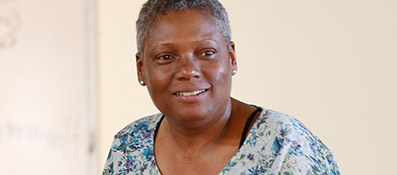 About the facilitator: Dr. Carla Sherrell has been a leader for educational equity and justice for over 30 years as a teacher, counselor, facilitator, and presenter. She was a facilitator for the Boulder Valley (Colorado) School District Equity Leadership Team, working with educators on personal and professional transformation that contributes to schools becoming supportive learning environments for all. Utilizing the National Coalition for Equity in Education (NCEE) adult equity model, she created and co-facilitated a student equity leadership program that guided youth in the process of becoming facilitators in equity work. Dr. Sherrell has presented and facilitated on equity and inclusivity at numerous regional and national conferences including the University of Colorado Educators-of-Color and Allies Summit, Colorado and Wyoming School-University Partnership for Educational Renewal, Colorado Association of School Executives, Salem Oregon School District, Catholic Charities of San Jose, CA, and the national conferences of NCEE and the National Association for Multicultural Education. She holds her doctor of education degree in Educational Leadership and Change with a focus on structural inequality and diversity, and is currently a core candidate assistant professor in the Graduate School of Psychology at Naropa University in Boulder, Colorado.