

A major subtext of the course is the distinction between how the Bible was read by ancient interpreters (whose interpretations became the basis for many iconic literary and artistic works of Western Civilization) and how it is approached by modern bible scholarship. James Kugel, former Harvard professor and author of the course’s textbook, contends that these ways of reading the Bible are mutually exclusive. Professor Cohen respectfully disagrees.
Learn more about this religious online course and register on Harvard University
Disclaimer: Sacred Space Online Learning (SSOL) seeks to provide individuals with information about religious, spiritual, or faith-based online resources from a variety of sources. Sacred Space Online Learning does NOT claim ownership over this online course or online offering. Sacred Space Online Learning is also NOT responsible for the accuracy of the materials, the content, the way they are advertised or taught, or the costs associated with this online course or offering. The views and opinions expressed in this online course or offering are those of the creators and/or the persons appearing in the online class or offering. They do not necessarily reflect the views and opinions of SSOL, the OFLD, or MCC. If you have any questions or concerns please contact the creator(s) of the given online course or online offering.
Introduction to the New Testament History and Literature (Yale University)

Source: Yale University
Although theological themes occupy much attention, the course does not attempt a theological appropriation of the New Testament as scripture. Rather, the importance of the New Testament and other early Christian documents as ancient literature and as sources for historical study will be emphasized. A central organizing theme of the course will focus on the differences within early Christianity (-ies). This on-demand online religious course includes (26) lectures.
Learn more about this online religious course from Yale University
Texts
A modern translation of the Bible. The New Revised Standard Version is recommended. A good study-Bible edition is The New Oxford Annotated Bible with Apocrypha. Other reputable modern editions, such as The New English Bible, The Jerusalem Bible, or The New International Version, are acceptable. This is meant to exclude old versions, such as the King James Version or the Douay Version, and modern paraphrases, such as The Living Bible.
Ehrman, Bart D. The New Testament: A Historical Introduction to the Early Christian Writings, 4th ed. New York: Oxford University Press, 2007.
About Professor Dale B. Martin
Dale B. Martin is the Woolsey Professor of Religious Studies at Yale. He was educated at Abilene Christian University, Princeton Theological Seminary, and Yale University. His work explores the New Testament, Christian origins, the Greco-Roman world, the ancient family, and gender and sexuality in the ancient world. Professor Martin has been awarded fellowships by the National Endowment for the Humanities, the Fulbright Commission, the Alexander von Humboldt Foundation, and the Lilly Foundation. He is a member of the American Academy of Arts and Sciences (elected 2009). His publications include Slavery as Salvation, The Corinthian Body, Inventing Superstition, Sex and the Single Savior, and Pedagogy of the Bible.
Disclaimer: Sacred Space Online Learning (SSOL) seeks to provide individuals with information about religious, spiritual, or faith-based online resources from a variety of sources. Sacred Space Online Learning does NOT claim ownership over this online course or online offering. Sacred Space Online Learning is also NOT responsible for the accuracy of the materials, the content, the way they are advertised or taught, or the costs associated with this online course or offering. The views and opinions expressed in this online course or offering are those of the creators and/or the persons appearing in the online class or offering. They do not necessarily reflect the views and opinions of SSOL, the OFLD, or MCC. If you have any questions or concerns please contact the creator(s) of the given online course or online offering.
Introduction to the Old Testament (Hebrew Bible) (Yale University)

Source: Yale University
A wide range of methodologies, including source criticism and the historical-critical school, tradition criticism, redaction criticism, and literary and canonical approaches are applied to the study and interpretation of the Bible. Special emphasis is placed on the Bible against the backdrop of its historical and cultural setting in the Ancient Near East. This on-demand religious class includes (24) lectures.
Learn more about this online religious course from Yale University
Texts
Berlin, Adele, and Marc Zvi Brettler, eds., Michael Fishbane, senior consulting editor. 2004. The Jewish Study Bible: Featuring the Jewish Publication Society Tanakh Translation. Oxford: Oxford University Press.
Pritchard, James B, ed. 1958. The Ancient Near East, Volume 1: An Anthology of Texts and Pictures. Princeton, N.J.: Princeton University Press.
About Professor Christine Hayes
Christine Hayes is the Robert F. and Patricia Ross Weis Professor of Religious Studies at Yale. She received her Ph.D. from University of California, Berkeley in 1993. A specialist in talmudic-midrashic studies, Hayes offers courses on the literature and history of the biblical and talmudic periods. She is the author of two scholarly books:Between the Babylonian and Palestinian Talmuds (see below), recipient of the 1997 Salo Baron prize for a first book in Jewish thought and literature, and Intermarriage and Conversion from the Bible to the Talmud, a 2003 National Jewish Book Award finalist. She has also authored an undergraduate textbook and several journal articles.
Disclaimer: Sacred Space Online Learning (SSOL) seeks to provide individuals with information about religious, spiritual, or faith-based online resources from a variety of sources. Sacred Space Online Learning does NOT claim ownership over this online course or online offering. Sacred Space Online Learning is also NOT responsible for the accuracy of the materials, the content, the way they are advertised or taught, or the costs associated with this online course or offering. The views and opinions expressed in this online course or offering are those of the creators and/or the persons appearing in the online class or offering. They do not necessarily reflect the views and opinions of SSOL, the OFLD, or MCC. If you have any questions or concerns please contact the creator(s) of the given online course or online offering.
Reading Queerly (Queer Theology)
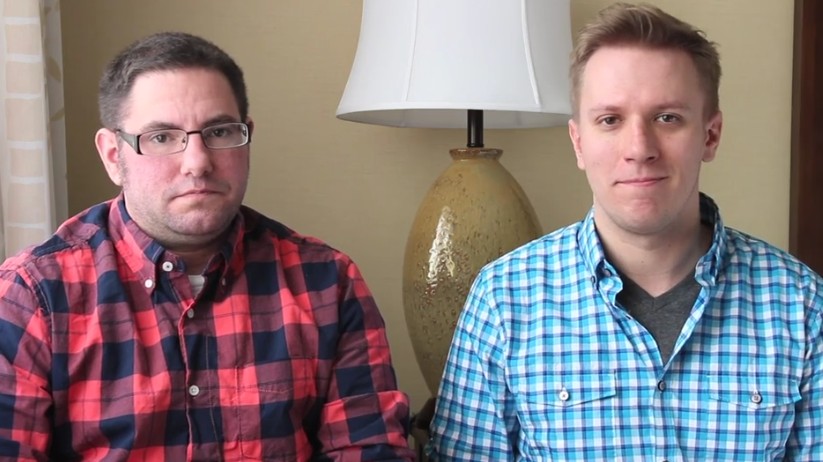
We want to take a year of doing this course–and our decades of faith-based LGBTQ work–and distill it down to the basics for you. If you’re looking to reconcile your faith with your queerness (or the queerness of your friends and family), we made this for you. If you’ve got the “acceptance” part down and are ready to dive deeper, to further explore how faith and LGBTQ experiences and issues can enrich each other, we made this for you. And if you’re looking to do that alongside others who know, understand, respect, and support you, we made this for you.
Best of all, this three-part Reading Queerly mini-course is free. Here’s why we made it and what you’ll learn:
- the four types of queer theology
- how to deconstruct oppressive and unhelpful Christian theology and begin to reconcile queerness and Christianity
- how to cultivate a life-giving, powerful Christian faith that is radically inclusive
Learn more about this course and register on Queer Theology
Disclaimer: Sacred Space Online Learning (SSOL) seeks to provide individuals with information about religious, spiritual, or faith-based online resources from a variety of sources. Sacred Space Online Learning does NOT claim ownership over this online course or online offering. Sacred Space Online Learning is also NOT responsible for the accuracy of the materials, the content, the way they are advertised or taught, or the costs associated with this online course or offering. The views and opinions expressed in this online course or offering are those of the creators and/or the persons appearing in the online class or offering. They do not necessarily reflect the views and opinions of SSOL, the OFLD, or MCC. If you have any questions or concerns please contact the creator(s) of the given online course or online offering.
Homosexuality & the Bible: My First Time (Queer Theology)

Learn more about Homosexuality & the Bible: My First Time by Brian G. Murphy on QueerTheology.com
Disclaimer: Sacred Space Online Learning (SSOL) seeks to provide individuals with information about religious, spiritual, or faith-based online resources from a variety of sources. Sacred Space Online Learning does NOT claim ownership over this online course or online offering. Sacred Space Online Learning is also NOT responsible for the accuracy of the materials, the content, the way they are advertised or taught, or the costs associated with this online course or offering. The views and opinions expressed in this online course or offering are those of the creators and/or the persons appearing in the online class or offering. They do not necessarily reflect the views and opinions of SSOL, the OFLD, or MCC. If you have any questions or concerns please contact the creator(s) of the given online course or online offering.
Violence, Myth, and Scripture with Suzanne Ross (ChurchNext)

Source: ChurchNext
Blaming God for our own violence and failings is as old as humanity. But how authentic is this? And so how helpful is this?
Suzanne Ross has dedicated her career to helping people understand that human violence is not divine. She runs The Raven Foundation, which is dedicated to helping people understand the root causes of our violence, shaming, and blaming. It is based in Mimetic Theory, which can help us understand things as basic as why our best friends can turn into our worst enemies. In this introductory course Suzanne helps us understand how this theory holds true in history, our lives, and the Bible. Her lectures include:
- Defining Myth and Scripture
- Mimetic Theory
- Myth: Romulus and Remus
- Scripture: Cain and Abel
This is a fascinating class that can help us understand the root causes of violence and, hence, new strategies and insights into how we might curb it.
Ross is the author of The Wicked Truth: When Good People Do Bad Things and The Wicked Truth About Love (see below for more)
Learn more about this course and register at ChurchNext
Disclaimer: Sacred Space Online Learning (SSOL) seeks to provide individuals with information about religious, spiritual, or faith-based online resources from a variety of sources. Sacred Space Online Learning does NOT claim ownership over this online course or online offering. Sacred Space Online Learning is also NOT responsible for the accuracy of the materials, the content, the way they are advertised or taught, or the costs associated with this online course or offering. The views and opinions expressed in this online course or offering are those of the creators and/or the persons appearing in the online class or offering. They do not necessarily reflect the views and opinions of SSOL, the OFLD, or MCC. If you have any questions or concerns please contact the creator(s) of the given online course or online offering.
Let the Women Speak! with Lindsay Hardin Freeman (ChurchNext)

Source: ChurchNext
Lindsay Hardin Freeman looked at every instance of a woman speaking in the Bible, and what she found is powerful, life-giving, and transformational.
Based on her award-winning book published by Forward Movement, Bible Women: All Their Words and Why They Matter (see Amazon link above), Freeman invites us into a sacred circle of inspiring voices. While we all may be familiar with Mary, Martha, Sarah, and Elizabeth, we may be surprised to discover that not only do none of these women hold the record for speaking the most in the Bible, but those that do offer equal inspiration in their words and deeds.
Here are are her presentations:
- Women in the Bible
- Women in the Hebrew Scriptures
- Women in the Apocrypha
- Women in the New Testament
This course is perfect for those who are interested in Bible study, especially those looking to hear women’s voices in scriptures.
Learn more about this course and register at ChurchNext
Disclaimer: Sacred Space Online Learning (SSOL) seeks to provide individuals with information about religious, spiritual, or faith-based online resources from a variety of sources. Sacred Space Online Learning does NOT claim ownership over this online course or online offering. Sacred Space Online Learning is also NOT responsible for the accuracy of the materials, the content, the way they are advertised or taught, or the costs associated with this online course or offering. The views and opinions expressed in this online course or offering are those of the creators and/or the persons appearing in the online class or offering. They do not necessarily reflect the views and opinions of SSOL, the OFLD, or MCC. If you have any questions or concerns please contact the creator(s) of the given online course or online offering.
Introduction to St. Paul with George Guthrie (ChurchNext)

Source: ChurchNext
It’s been said that the person who had the most influence on Christianity wasn’t Jesus – but Paul.
Paul, a devout Jew turned Jesus follower, wrote most of the books in the New Testament of the Bible. While Paul never met Jesus personally, he had a notable conversion experience that filled him with a zeal and drive that inspired him to travel extensively founding churches, ministering to new congregations, and writing letters that have turned into some of the most popular writings in the history of the English language.
That’s why understanding who Paul was and what he wrote is so important to us as we seek to build our personal faith. George Guthrie knows all about this. He is a scholar, author, New Testament professor, and student of Paul. In this course, George will help us learn:
- Who was Paul?
- What was Paul trying to get across?
- A Survey of Pauline literature
- Criticisms and controversies surrounding Paul
This course is perfect for every member of your congregation, especially those who are interested in deepening their understanding of the Bible. This is a great way to inform and begin discussion around this important Bible figure.
Learn more about this course and register at ChurchNext
Disclaimer: Sacred Space Online Learning (SSOL) seeks to provide individuals with information about religious, spiritual, or faith-based online resources from a variety of sources. Sacred Space Online Learning does NOT claim ownership over this online course or online offering. Sacred Space Online Learning is also NOT responsible for the accuracy of the materials, the content, the way they are advertised or taught, or the costs associated with this online course or offering. The views and opinions expressed in this online course or offering are those of the creators and/or the persons appearing in the online class or offering. They do not necessarily reflect the views and opinions of SSOL, the OFLD, or MCC. If you have any questions or concerns please contact the creator(s) of the given online course or online offering.
Introduction to Revelation with Wayne Whitney (ChurchNext)

Source: ChurchNext
Given its vibrant and imaginative imagery and constant reference to an age and time so far removed from our own, many people set aside the Book of Revelation as too complicated and confusing to read. And those who have read it seem to have wide and varied interpretations that can be dark, judgmental, and downright scary.
However, the Rev. Dr. Wayne Whitney believes Revelation held a simple and profound message to its earliest readers, and continues to do so today, for you and me. In this class, Wayne tells us:
- Who Wrote Revelation and Why
- Themes in Revelation
- Interpreting Revelation
- Reading Revelation
This course is perfect for people who have never read Revelation and are curious about it, as well as those who are familiar with its main themes and are looking or a refresher.
Learn more about this course and register at ChurchNext
Disclaimer: Sacred Space Online Learning (SSOL) seeks to provide individuals with information about religious, spiritual, or faith-based online resources from a variety of sources. Sacred Space Online Learning does NOT claim ownership over this online course or online offering. Sacred Space Online Learning is also NOT responsible for the accuracy of the materials, the content, the way they are advertised or taught, or the costs associated with this online course or offering. The views and opinions expressed in this online course or offering are those of the creators and/or the persons appearing in the online class or offering. They do not necessarily reflect the views and opinions of SSOL, the OFLD, or MCC. If you have any questions or concerns please contact the creator(s) of the given online course or online offering.
Introducing the Psalms with Isaac Everett (ChurchNext)

Source: ChurchNext
The book of Psalms may be the most widely read book in the world. And for good reason.
Musician and composer Isaac Everett argues that there is no more human book in the Bible than the Psalms, which means they have a way of touching us like no other. Everett has been immersed in the psalms for years, and has even written a psalter of his own.
In this class, Isaac gives us an overview of the Psalms by touching on these areas:
- Origins of the Psalms
- Themes of the Psalms
- Favorite Psalms
- How to Read the Psalms
This class is an insightful overview suitable for newcomers to the Psalms as well as for veterans who are looking for a solid refresher course.
Learn more about this course and register at ChurchNext
Disclaimer: Sacred Space Online Learning (SSOL) seeks to provide individuals with information about religious, spiritual, or faith-based online resources from a variety of sources. Sacred Space Online Learning does NOT claim ownership over this online course or online offering. Sacred Space Online Learning is also NOT responsible for the accuracy of the materials, the content, the way they are advertised or taught, or the costs associated with this online course or offering. The views and opinions expressed in this online course or offering are those of the creators and/or the persons appearing in the online class or offering. They do not necessarily reflect the views and opinions of SSOL, the OFLD, or MCC. If you have any questions or concerns please contact the creator(s) of the given online course or online offering.